iSayFlick Admin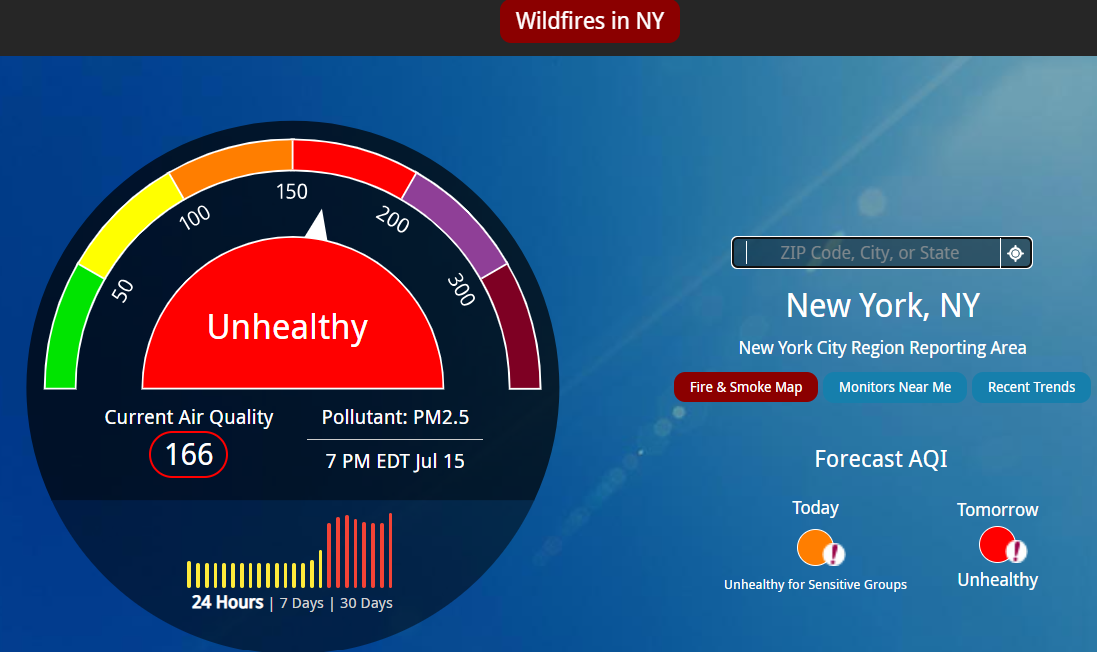
Canadian Wildfire Smoke Is Affecting New York: How Long Will It Last and How Can You Stay Safe?
A thick haze has settled over parts of New York as smoke from hundreds of wildfires burning across Canada drifts south into the Northeast. The smoky skies, reduced visibility, and unhealthy air quality have prompted advisories across the region, leaving many New Yorkers wondering: How long will this last, and what can we do to protect ourselves?
Why Is Smoke from Canada Reaching New York?
Wildfire smoke can travel hundreds—even thousands—of miles. Strong upper-level winds are carrying fine particles from large wildfires in Ontario and other parts of Canada into New York, New Jersey, and much of the Northeast.
Although the fires are far away, the tiny particles (known as PM2.5) can significantly reduce air quality and pose health risks when they reach ground level.
How Long Will the Smoke Last?
The answer depends on weather patterns and wind direction.
Current forecasts indicate that smoky conditions could linger through the end of the week, although the intensity may vary from day to day. If winds shift or rainfall moves through the region, air quality can improve quickly. However, as long as the Canadian wildfires continue burning and winds remain favorable, additional waves of smoke are possible.
Who Is Most at Risk?
While everyone can be affected by wildfire smoke, some groups are more vulnerable, including:
- Children
- Older adults
- Pregnant individuals
- People with asthma, COPD, or other lung diseases
- People with heart disease
Even healthy adults may notice symptoms such as:
- Burning or watery eyes
- Scratchy throat
- Coughing
- Headaches
- Shortness of breath during exercise
- Fatigue after spending time outdoors
How to Protect Yourself?
Stay Indoors When Air Quality Is Poor
If the Air Quality Index (AQI) reaches unhealthy levels, limit the amount of time you spend outside, especially during exercise or strenuous activities.
Keep Indoor Air Clean
- Close windows and doors.
- Run your air conditioner on recirculate if possible.
- Use a HEPA air purifier if you have one.
Wear a High-Quality Mask Outdoors
If you must spend time outside when smoke levels are high, a well-fitting N95 or KN95 mask can help reduce exposure to harmful particles. Cloth masks and standard surgical masks are much less effective against wildfire smoke.
Check the Air Quality Before Heading Out
Air quality can change throughout the day. Before exercising, walking your dog, or taking children to the park, check your local Air Quality Index (AQI) using trusted sources such as AirNow or your local weather service.
Pay Attention to Symptoms
Seek medical care if you experience:
- Difficulty breathing
- Chest pain
- Severe wheezing
- Persistent dizziness
- Symptoms that worsen despite staying indoors
Why Wildfire Smoke Is a Serious Health Concern
Wildfire smoke contains microscopic particles that can travel deep into the lungs and even enter the bloodstream. Short-term exposure may irritate the eyes and respiratory system, while prolonged or repeated exposure has been linked to increased risks of asthma attacks, heart problems, and other health complications.
Health experts emphasize that smoke can be dangerous even when you can’t strongly smell it, because harmful fine particles may still be present in the air.